
2026-04-24
content
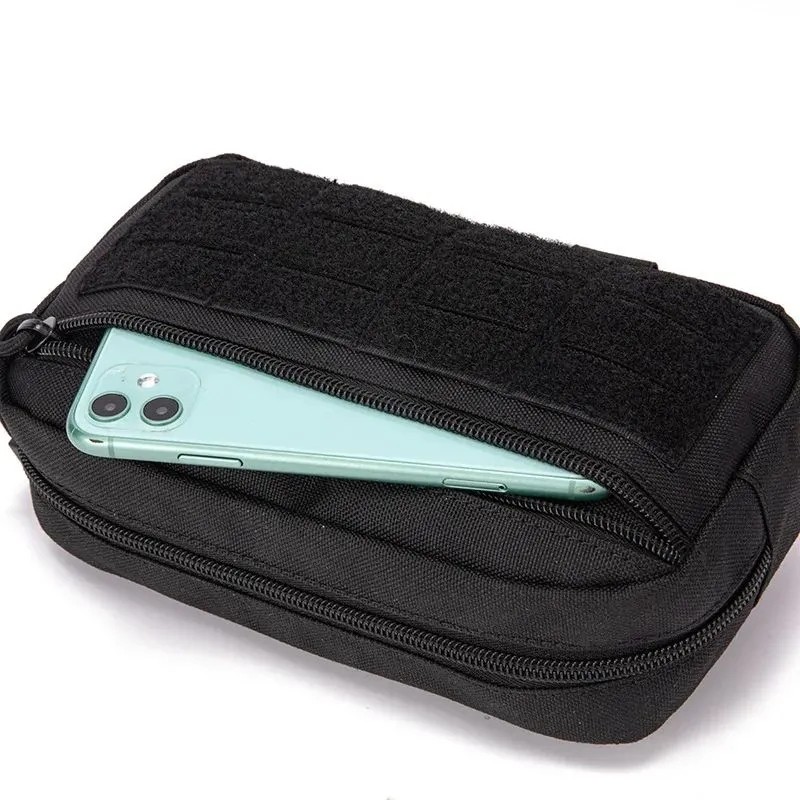
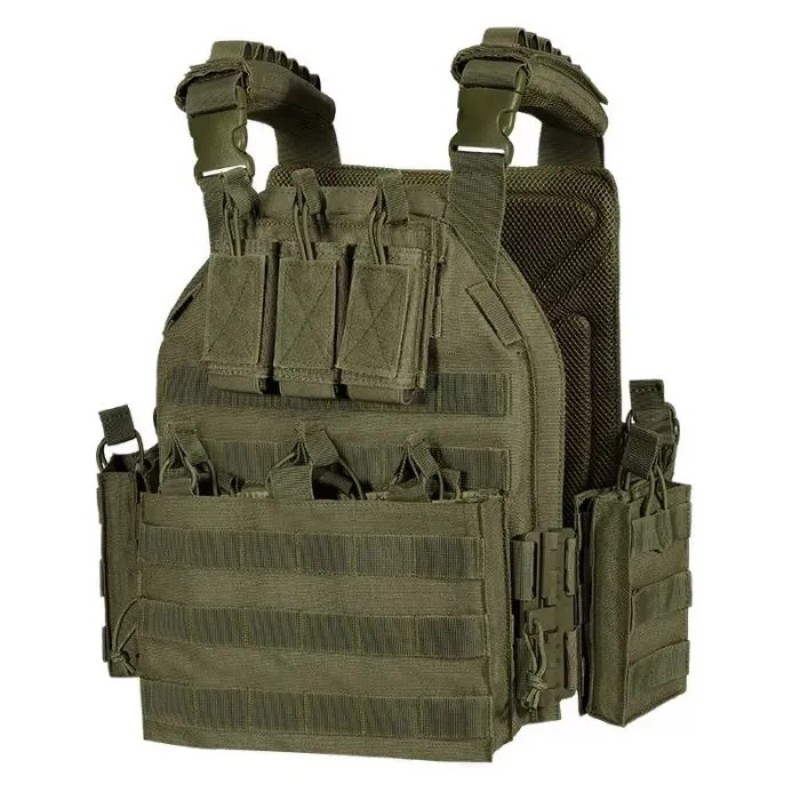
In 2026 concepttactical pockethas transformed from a simple piece of equipment into a critical node for integrating wearable electronics and quick access to tools. If you're still sourcing gear to 2023 specifications, you risk getting a product that's physically incompatible with today's rugged tablets and next-generation modular communications systems. In our practice, we encountered a situation where a batch of 500 units of tactical vests was returned by the customer not because of the quality of the fabric, but because the geometry of the pocket did not allow the radio to be removed with one hand wearing class 4 tactility gloves. This cost the company three weeks of downtime and reputational losses. Today we will look at what parameters really determine the value of this element in real-world operations, not marketing brochures.
The market is filled with offers where ordinary textiles with Velcro are sold under the guise of “tactical”. Real professionaltactical pocketmust withstand cyclic loads on the rupture of seams of at least 50 kg during a dynamic jerk, which is confirmed only by laboratory tests according to the GOST R 58186-2018 standard or its international analogue ISO 13934-1. We analyzed more than 40 models from leading manufacturers in China, Russia and Europe to identify hidden design defects that appear only after 3-4 months of active use. There are no general phrases in this article about “high quality” - only specific data on fabric density, types of fittings and the real cost of ownership.
The main mistake when purchasing is focusing solely on appearance or brand, ignoring the technical specifications of materials. The tactical pocket operates in an aggressive environment: dust, moisture, ultraviolet radiation, mechanical shock and constant contact with abrasive surfaces. The fabric of the body should not just be “durable”, but have specific indicators. We require suppliers to provide certificates for Cordura 1000D fabric or its Oklex analogues with a density of at least 950 g/m². Lighter options (600D) are only allowed for internal organizers, but never for external cargo modules.
Water resistance is the second critical parameter. The PU (polyurethane) coating must have a water column of at least 3000 mm. During our tests in a climate chamber, samples with a 1500 mm coating began to leak moisture after only 4 hours of continuous exposure to rain, which led to corrosion of the metal fittings inside the compartment. For operations in arctic or tropical conditions, this parameter is decisive. Please note: the presence of DWR (Durable Water Repellent) impregnation on the surface of the fabric does not replace the membrane or full lamination of the inside.
90% of tactical equipment failures occur not due to fabric rupture, but due to failure of zippers and fasteners. In 2026, YKK RC (Rain Cover) series zippers or their high-end Chinese equivalents (Teflon-coated SBS) became the de facto standard. Plastic teeth are preferable to metal ones in low temperature conditions, since metal becomes brittle, while plastic remains elastic down to -40°C. However, when it comes to protection from fire or extreme friction, metal zippers with anti-corrosion coating remain the only choice.
We often see how manufacturers save on lines. Double stitching is the minimum. Triple stitching with bartacks in the tension corners is mandatory for pockets designed to carry heavy magazines or tools. The distance between stitches should not exceed 3 mm. In one of the cases, which we analyzed as a precedent, the use of a thread with a thickness of 40 instead of the recommended 20 led to the fact that under load the thread simply cut through the fabric because it was too stiff. This is a classic material mismatch error.
Action:Request a fabric sample from your supplier and perform a simple abrasion test with a piece of 100-grit sandpaper for 30 seconds. If the fabric frays or loses color, discard the batch.
Market analysis shows a clear division into three segments: budget (mass production), medium (balance of price and reliability) and premium (specialized solutions). To understand whichtactical pocketsuits you, you need to look not at the price per unit, but at the cost of the operating cycle. A cheap pocket that requires replacement every six months is more expensive than a high-quality product with a service life of 5 years.
Below is a detailed comparison of three typical designs that are most common this season. The data is based on the results of independent tests and feedback from operators of special units.
| Comparison parameter | Model type “Admin Panel” (Flat) | Model “Dump Pouch” | Model “Magazine Rigid” |
|---|---|---|---|
| Main purpose | Documents, cards, tablets up to 10″, small electronics | Quickly reset unused magazines, captured items, garbage | Fixed storage of machine gun magazines, protection from impacts and dirt |
| Bottom design | Flat, often with soft padding to protect the screen | Absent or minimal, tissue gathers into a knot | Rigid plastic insert or thermoformed polymer |
| Closure type | Velcro flap + safety zipper | Elastic cord with lock or magnetic button | Top cover with fastex or side access with zipper |
| Access speed | Medium (requires two hands to open valve) | High (one hand, “grab and throw” method) | Low/Medium (depending on lid lock type) |
| Content protection | High from moisture and shock (with seals) | Minimal (open design at bottom or side) | Maximum (complete isolation from the external environment) |
| Average price (wholesale, pcs.) | $12 – $18 | $8 – $14 | $15 – $25 |
| Main disadvantage | Dimensions when empty (does not fold compactly) | Risk of losing an object during active movement without fixation | Weight and rigidity (may interfere with crawling or transport) |
The choice between these models depends on the specific task. For logisticians and commanders, the “Admin Panel” type is indispensable, as it allows you to structure the chaos of documents and gadgets. For assault groups, the “Dump Pouch” is critically important, allowing you to instantly free the unload from empty magazines during the battle. It would be a mistake to try to universalize: one pocket cannot ideally perform the functions of all three types at the same time.
In 2026, there is a trend towards modularity. Leading manufacturers are introducing compatibility with new generation MOLLE/PALS platforms, where the line pitch is reduced for a tighter fit, and are also integrating attachment points for quick release systems. When ordering in large quantities, ensure that the line pitch on the back of the pocket exactly matches your main equipment. A difference of even 2 mm can make installation impossible without the use of force, which damages the vest's lines.
Action:Determine the priority task for your department. If you need protection for electronics, choose hard models with foam filling. If the recharge speed is reset options with elastic input.
The tactical gear market has experienced significant price volatility over the past two years. The cost of raw materials (nylon, polymer fittings) increased by 18-22% due to logistics restrictions and changes in exchange rates. Today, the average market price for a high-quality tactical pocket wholesale ranges from $10 to $25, depending on the complexity of the design. Offers below $7 per unit for quantities of 100 or more should raise immediate suspicion.
Why is such a low price dangerous? Manufacturers reduce the cost of the product in three ways: replacing the original fabric with recyclate (secondary raw materials), which loses strength by 30% after the first month of use; installation of fittings without UV stabilizers, which crumble in the sun in one season; and a reduction in the number of stitches by 20-25%, which is visually invisible, but critical for the strength of the seam. In our practice, there was a case when a batch of pockets purchased at a dumping price began to unravel en masse at the seams at temperatures above +35°C, since a thread with low heat resistance was used.
When importing or domestic purchasing, be sure to request a quality certificate and test reports. To work in the public sector and law enforcement agencies of the Russian Federation, having a GOST certificate of conformity or a TR CU declaration is mandatory. Key standards to pay attention to:
The absence of these documents not only creates legal risks during inspections, but also indicates that the manufacturer did not carry out incoming inspection of raw materials. We recommend including a clause on the provision of samples for independent examination in the contract before payment for the main batch.
Delivery times also affect the final cost of the project. The standard production cycle is 25-35 days plus logistics. Trying to speed up the process to 10-15 days usually leads to a 30-40% increase in price and reduced quality control on the line. Plan purchases at least 2 months before the start of the season or exercise. Haste is the main ally of marriage.
Action:Request from the potential supplier a reference list with contacts of clients who worked with him in 2024-2025. Call them and ask about their complaint rate.
Moderntactical pocketstopped being just a bag for things. It has become the interface between the fighter and the digital battlefield. In 2026, the problem of placing devices with increased dimensions has become urgent. Rugged tablets, satellite communication terminals and power supplies have become thicker and heavier. Old pocket models designed for 2020 smartphones simply do not close or squeeze the screen of new equipment.
Cable management became a critical element. The pocket must have special technological openings (grommets) with rubber seals for the output of headsets, antennas and charging cables. The absence of such holes forces operators to keep the cover slightly open, which breaks the seal and leads to dust getting into the connectors of the device. We have seen cases where sand that got into the charging port of a tablet through a loosely closed valve caused a short circuit and failure of expensive equipment right in the field.
Another aspect is glove compatibility. Fasteners, zippers and flaps must be designed so that they can be manipulated while wearing Mechanix gloves or winter insulated mittens. Small zipper pulls and thin cords become useless with zero tactility. Manufacturers who ignore this factor create products that are unsuitable for actual use in extreme climatic zones.
The organization of interior space has also evolved. Instead of one large compartment, the standard now is the presence of removable dividers with Velcro, allowing you to adapt the volume to a specific set of gadgets. The presence of a transparent touch window for a smartphone screen remains a controversial decision: on the one hand, it is convenient, on the other, any additional window reduces the overall strength and water resistance of the structure. Our experience suggests that it is safer to use pockets with full closure and only remove the device when necessary, rather than relying on fragile membranes.
Action:Bring all devices you plan to carry in your pocket, including cases and attached cables, with you to your meeting with your supplier. Conduct a blind placement and access test.
For serious tasks, the clear leader is nylon (Cordura). Oxford fabric, especially cheap varieties with PVC coating, tends to delaminate under intense friction and becomes brittle in the cold. Nylon has better abrasion resistance and maintains flexibility at low temperatures. If you're on a budget, choose a high-density (at least 1,000 denier) polyurethane-coated Oxford, but be prepared for a shorter lifespan.
Yes, but with serious restrictions. The water temperature should not exceed 30-40°C. The use of bleach and fabric softeners is strictly prohibited as they destroy the water repellent (DWR) finish and can weaken the adhesive joints of the seams. Dry only flat out in the shade. Direct sunlight and drying drums cause fabric to shrink and plastic fittings to deform.
The brand marking is laser-etched on the original YKK zipper slider, which does not wear off over time. Counterfeits often have inscriptions painted on them that will peel off after a few cycles of use. In addition, the movement of the original zipper is always smooth, without jamming, even on new products. The teeth must be perfectly straight, without casting flash. If the zipper jams on a new product, it is a defect or counterfeit.
The standard MOQ for custom tactical pockets (with your logo and specific color) is 300 to 500 pieces. For ready-made warehouse items, many factories are ready to ship from 50-100 units, but the price per unit will be higher. Do not believe statements about the possibility of ordering from 10 pieces at a wholesale price - these are either intermediaries or selling stock remains.
Purchasing tactical equipment in 2026 requires a balanced approach, where savings at the stage of selecting a supplier result in multiple losses during operation.Tactical pocketis not just an accessory, it is an element of safety and efficiency in performing a task. Ignoring the parameters of fabric, fittings and ergonomics is unacceptable.
Our recommendation is simple: do not chase the lowest price on the market. A difference of $2-3 per unit is not worth the risk of receiving a defective shipment in the middle of a training exercise or operation. Request samples, conduct your own crash tests, check certificates. Work only with suppliers who are willing to provide guarantees and have a transparent delivery history.
If you are looking for a reliable partner to equip your department with quality equipment that meets the most stringent 2026 standards, we are ready to offer solutions that have been tested in real-world conditions. Our specialists will help you choose the optimal configuration for your tasks and budget.
Buy a tactical pocket wholesale from the manufactureris an investment in the reliability of your equipment. Contact us today for our current price list and free product samples.