
2026-03-18
When you hear about a “backpack made of innovative nylon?”, the first thing that comes to mind is marketing hype. Everyone around is talking about durability, water repellency, and avant-garde technologies. But behind these big words there is often hidden either a banal 420D, or a material that actually behaves unpredictably in field conditions. Many manufacturers are guilty of what is called “innovation”. standard ripstop with a vague polyurethane coating. Real innovation is not just a shortcut, but an integrated approach to fiber weaving, impregnation and, critically, the durability of seams and fittings under load. It is this practical experience, and not advertising slogans, that will be discussed.
In the tactical equipment industry, especially in the segment where a company likeGuangzhou Ida Travel Products Co.,Ltd(their portal -https://www.yidaoutdoor.ru), under ?innovation? often understand specific things. This is not an abstraction. For example, Cordura nylon? with a density of 1000D is already a classic, but an innovation could be its hybrid with Kevlar fibers to reduce weight without losing tensile strength. Or we are talking about fabrics with a special weave that resist abrasion not only on the plane, but also on the folds, in places of contact with belts and carabiners.
A common mistake is to evaluate fabric only by the ?D? (denier). Let's say we took "super-durable" 1000D nylon. But if the impregnation is weak, after two seasons in conditions of high humidity (say, in Kamchatka or in the Karelian forests) it begins to “tighten”? water, although initially declared as waterproof. Innovation often lies in impregnation. Not just PU (polyurethane), but something like a siliconized coating on both sides (Silicone Coating), which does not crack in the cold. I saw this in samples from suppliers, including those with whom Yida Outdoor cooperates - this is a different level.
Another point is tactility and weight. The most durable material is useless if the backpack made of it stands up like a stake and rattles as you go. Modern ?innovative? They have learned to make high-density nylons soft and quiet enough, which is critically important for a hunter. What is important here is not so much the composition as the technology for producing the thread and its twisting. This is something that you won’t see in the catalog, but you will feel with your hands and in action.
One of the most revealing cases involved a backpack marketed as being made from “the latest nano-coated nylon.” The material showed fantastic results in terms of hydrophobicity in laboratory tests. But in a real three-day hunt in wet snow with frequent temperature changes, a problem emerged: on the seams, despite the gluing, at sub-zero temperatures a microcrack formed in the coating. Water did not pour inside, but the fabric in these places began to get wet, losing its main premium characteristic.
This is a classic example where innovation in material was not matched by innovation in design and assembly. The manufacturer, focusing on the fabric, saved on the quality of thread for stitching and the method of gluing seams. After this incident, when evaluating any equipment, including the range of tactical backpacks and MOLLE bags, we always look at vulnerable components: the bottom, the fastening of the straps, the zippers. You can have the most perfect fabric, but if the seam on the shoulder strap fastening is done with a regular stitch without bark reinforcement, that’s a point of failure.
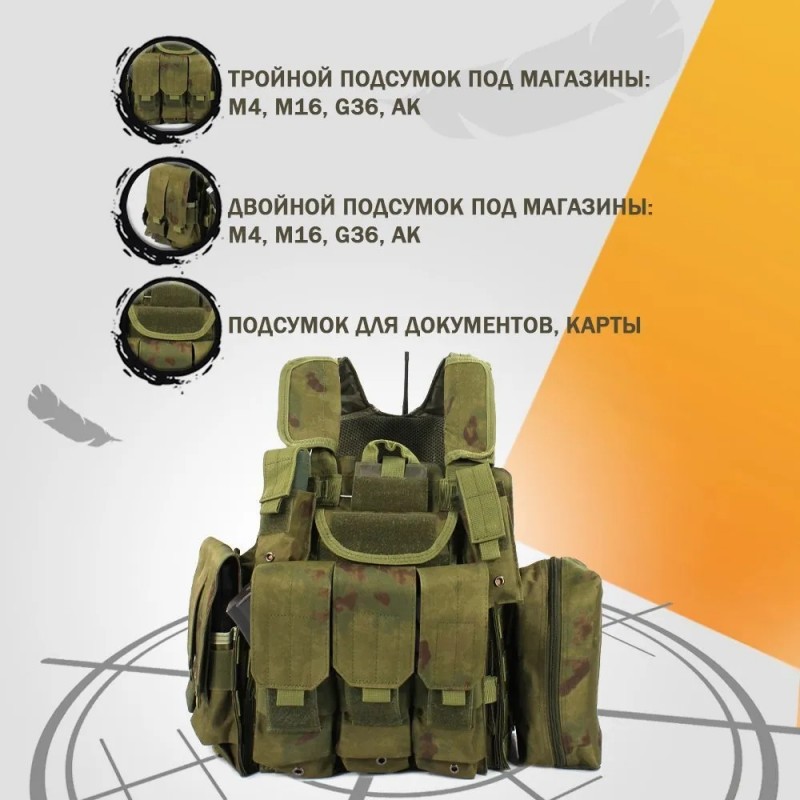
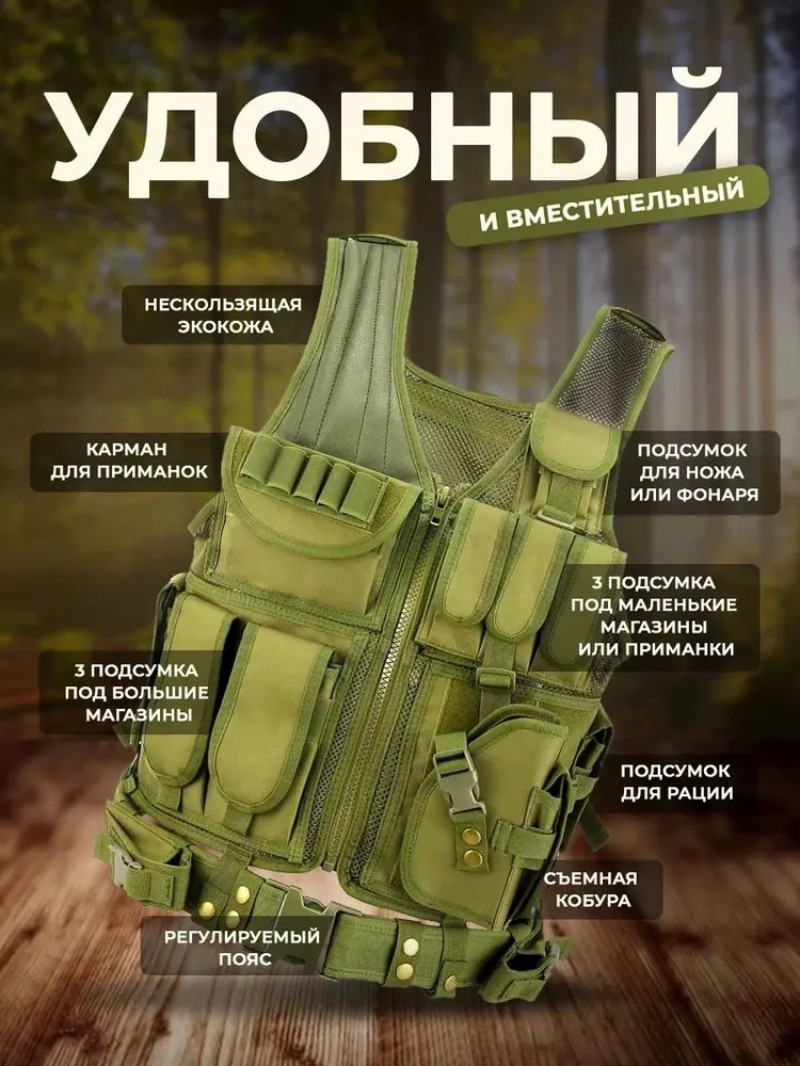
Companies that likeGuangzhou Ida Travel Products Co.,Ltd, deal with the full cycle from design to sales, there is an advantage here. They can include these risks at the development stage and strengthen critical areas, rather than simply purchasing beautiful fabric and sewing it according to a standard pattern. Theirtactical backpacksoften have an additional amplification point in places of high voltage, which indicates a practical rather than a catalog approach.
A hunter always wants a lightweight backpack. But lightweight often means less durable. Innovative nylons are trying to break this paradigm. For example, using Dyneema type fibers? (ultra-high molecular weight polyethylene) in composition with nylon. Such fabric, with less weight and thickness, can exceed the tensile strength of classic 1000D nylon. But the price also skyrockets.
The question is expediency. Is such material needed for the average multi-day mushroom hunting trip or duck hunting? Probably not. But for mountaineering or special tactical equipment, where every gram counts and the load is extreme, this is justified. In catalogs like the one onyidaoutdoor.ru, it is important to see the segmentation: these models are for heavy loads and use hybrid fabrics, and these are for a less aggressive environment, but with an excellent balance of price and quality.
I myself personally encountered a distortion in the pursuit of lightness. One is “ultra-light” a backpack made of avant-garde material did not survive contact with a sharp fir branch - it tore like paper. The manufacturer relied on longitudinal strength, forgetting about transverse strength. Conclusion: innovation must be balanced. Good modern nylon for outdoor activities is always a compromise, but a compromise calculated by engineers, not marketers.
You can talk about nylon as much as you like, but if your backpack has cheap plastic fastex fasteners that break at -15°C, or an economy-series YKK zipper that gets stuck due to dirt, all the high-tech material goes down the drain. It's like putting carbon wheels on a car with wooden brakes.
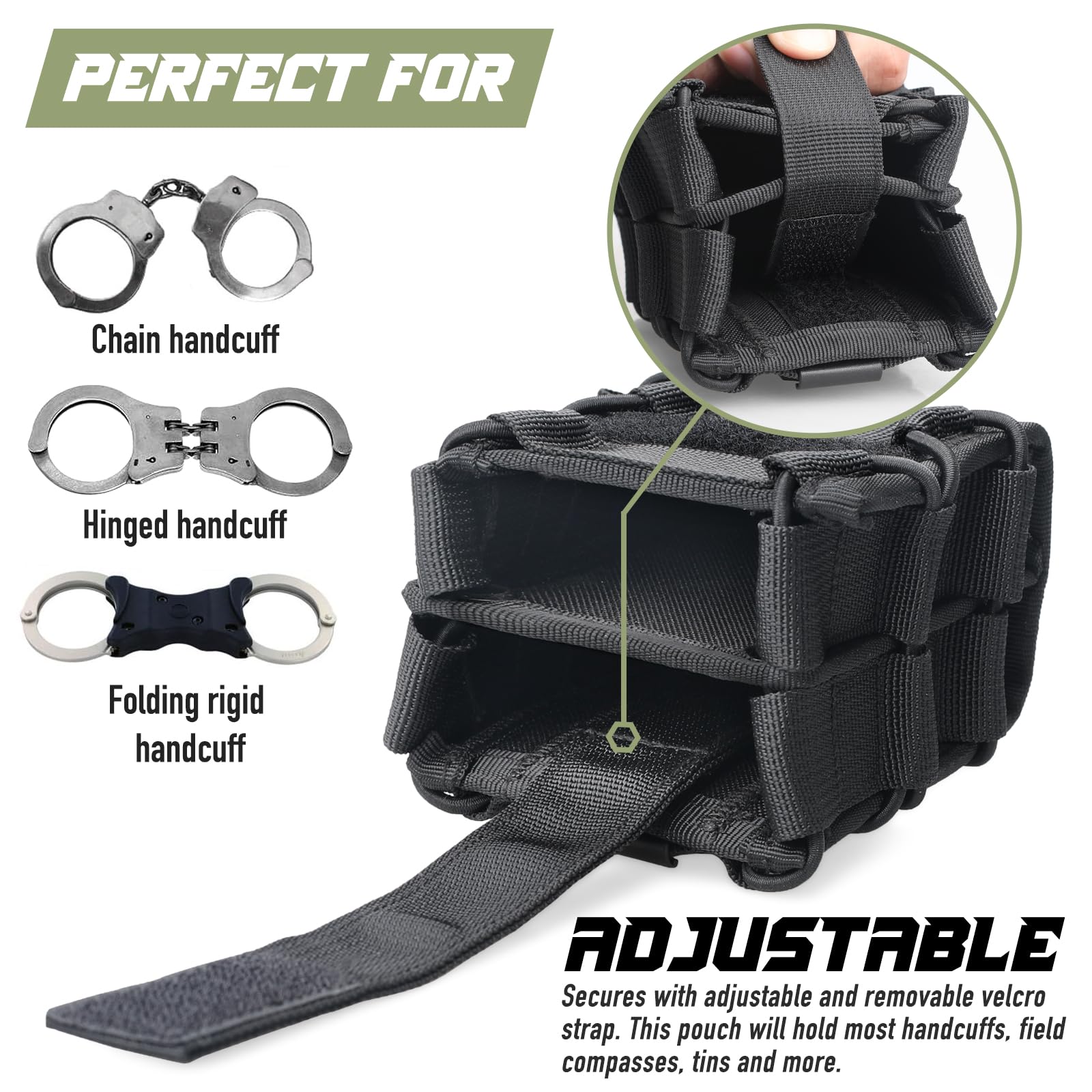
When evaluating any equipment, be ittactical MOLLE bagsorbulletproof bags, I first of all feel the fittings. High-quality metal fittings (for example, from Woojin or ITW Nexus) have a certain weight, smooth movement and a matte, often anodized finish. Plastic, if it is used in innovative models, should be recognizable - is it something like a heavy-duty polymer, like Duraflex? It does not crunch and does not turn white on the fold.
Here again you can see the difference between a simply sewn backpack and a designed one. Companies that, as stated in the descriptionGuangzhou Ida Co.,Ltd, combine design, development and production, and usually strictly control the supply of accessories. Because they are responsible for the final product. On their website you will notice that in the descriptions of serious models the brands of fittings are often directly indicated - this is a sign of confidence and attention to detail.
Any material ages. UV radiation, salts, sweat, friction - all this kills even the most advanced coatings. The key question is how does one age? Does the material degrade gradually, predictably, or does catastrophic failure occur? Good innovative nylon, even having lost some of its super properties, should remain a reliable working fabric.
I have an old 500D Cordura nylon tactical backpack. He is seven years old. The water-repellent impregnation has long since worn off, the fabric is frayed at the bottom and on the straps, but it does not fall apart or tear from the load. This is the standard for durability. Modern ?innovative? fabrics should at least match this, and ideally exceed it, while maintaining lightness. Some new impregnations, alas, after several washes with ordinary detergents are simply washed off, exposing the base fabric, which immediately begins to “drink.” water.
Hence the practical advice that I would give to any buyer: when choosing a backpack made of new material, ask not only how to clean it, but also how to restore the DWR (Durable Water Repellent) impregnation. If the manufacturer (as a responsible full-service company) offers specific sprays or restoration techniques, this is a good sign. This means they were thinking about the product life cycle, not just sales.
Ultimately, choosing a backpack made from innovative material is a matter of trust in the manufacturer. Trust based not on glossy brochures, but on the transparency of technology, attention to detail and, most importantly, feedback from similar users. When a company like the one mentionedGuangzhou Ida Travel Products Co.,Ltd, openly declares its activities - design, development, production, sales - this reduces risks. Because the chain is closed, and there is someone to ask.
Innovative nylon is a great tool. But the tool is in the hands of a competent design engineer. By itself it does not guarantee anything. A successful backpack is a synergy of material, thoughtful ergonomics, correct fittings and build quality. Seeing sections on the site withfunctional bagsorpersonal protective equipment, one can indirectly judge the seriousness of the approach: if a company works with a complex, demanding segment, then the attitude towards hunting backpacks will most likely be thoughtful.
So, meeting the next “revolutionary” material, it’s worth asking simple questions: how will it behave in bending under load after three years? what will happen to the seams? how to clean it and how to restore it? The answers to them will say much more about true innovation than all advertising epithets combined. After all, in the forest or in the mountains there is no place for beautiful words - there are only facts and results.