
2026-03-01
Innovation in backpacks is not about space materials at every exhibition. Most often, this is about how a problem that the client didn’t even know about was solved imperceptibly, in a production model, until he tried it. Many are looking for a breakthrough in the announcements of giants, but it is often born in the workshopssupplierswho spend years polishing one part.
Working with factories, you see different things. Big brands bring trends and marketing, but their terms of reference are often recycled ideas. But when you come to people likeGuangzhou Ida Travel Products Co.,Ltd(their website isyidaoutdoor.ru), and you talk to their engineers, you hear something different. They show a prototype of a harness system where they shifted the strap attachment point by just one and a half centimeters. It would seem nonsense. But for a mountain guide who carries this backpack 10 hours a day, this is a lifesaver for his back. This is innovation: invisible, but tangible.
Their company, founded in 2010, positions itself as an integrator of design and manufacturing. And this key word is integrator. They don't just sew according to other people's patterns. They have their owndevelopment, and they can afford to experiment with a batch of 300 pieces, which is not serious for a large brand, but a whole study for a niche market. General Manager Roxin Yuki talks about quality and the pursuit of excellence, but in reality it looks like a pile of defective samples in the corner of the workshop - those on which they tested new seam welding of waterproof fabric until they achieved the desired result.
Here's an example: everyone makes backpacks with a ventilated back. The standard is mesh. But during the hike, sand and pine needles fill the net, and it breaks. Ida's team once showed me a sample with a system of rigid but flexible polymer ribs that extended from the back to create an air channel. There was almost no network. The idea is not new, but their polymer did not break down in the cold. He asked: “Why don’t you launch it?” Answer: We are refining the fastening - when there is strong shaking, a knock appears. The client will forgive the leak, but not the extraneous sound? This is thinkinginnovation provider— bring it to mind, and not just create a “wow effect?” for the catalogue.
I'll tell you about an incident that taught me a lot. Once we ordered a batch of backpacks from one factory (not Ida) with “innovative”? quick-release chest strap with magnets. The idea is great - you can unfasten it in one motion even with gloves on. Passed tests in the laboratory. But in real conditions, during a hike in Kamchatka, the magnet was tightly stuck with fine metal dust from volcanic rocks and stopped being fixed. Complete failure. Innovation not tested in the field.
After that, I began to look at developments differently. Now any new sample that is sent to me, for example, from the sameyidaoutdoor.ru, I first give it not to testers, but to practical guides. Let them drag you around in the mud, snow, sand. Their feedback - “the ski pole attachment point is loose?” or “the flask pocket is rubbing against the lower back?” - this is the growth point for real innovation. Often it is these small improvements that are then replicated across all models and become a distinctive feature of the brand.
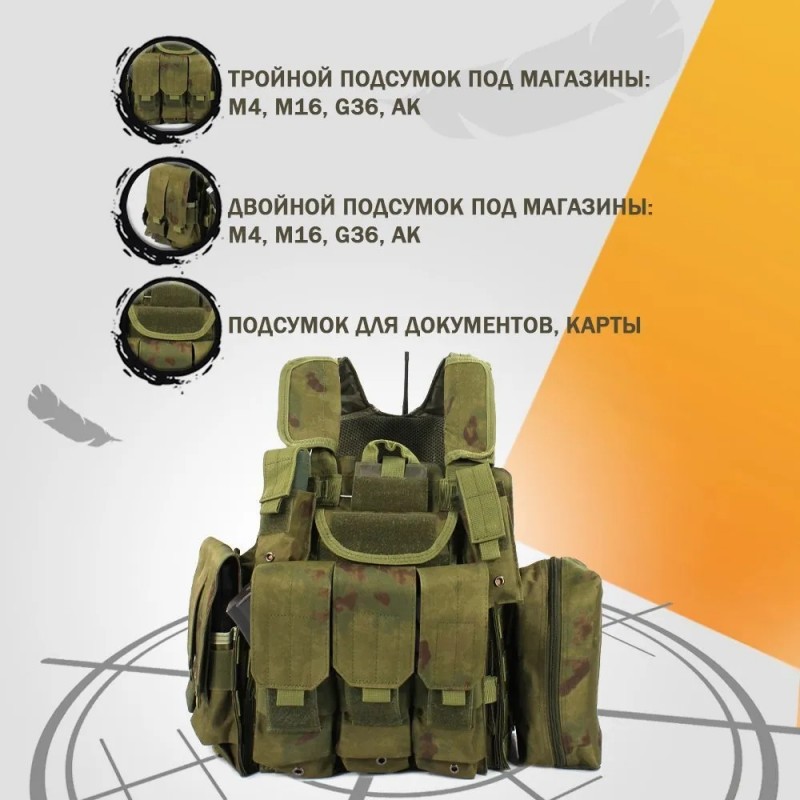
Ida has a systematic approach in this regard. Knowing what they're working ontactical equipment, I asked how they test the concealability of the MOLLE system. It turned out that they have an agreement with one training center, where instructors actually use samples on obstacle courses. And they return it with specific comments: “after a week of crawling on your bellies, the lower rows of the molle begin to crumble.” Without such a strict test, this defect would have appeared only after a year of sales.
Nowadays everyone is obsessed with ultra-light materials. Cuben Fiber, Dyneema Composite. The price per meter is exorbitant. But in 80% of trips such materials are overkill. True innovation from a supplier is not blindly using the most expensive, but intelligent combination.
I saw Ida develop them for trekking models. The bottom and main stress areas are made of dense cordura, while the sides and pockets are made of lighter, softer ripstop. The seams are not taped everywhere, but only in critical places, which saves weight and maintains flexibility. This decision was born not in a design bureau, but on the production line, when a technologist noticed that in certain places there was almost no load on the fabric. Here it is - innovation from the workshop.
Or the story with waterproof zippers. The standard is to soak the teeth. But after 200 opening-closing cycles, the impregnation wears off. Their engineers experimented with a butterfly valve design that physically diverts water away from the lock line rather than relying on chemistry. Works. Not as glamorous as a new nanomaterial, but priceless for a user caught in a week’s rain.
The field for innovation here is huge, but there are also many pitfalls. Everything is made with height-adjustable backrests. It would seem that the topic is exhausted. But look at the adjustment mechanism. Often this is a plastic strip with teeth that breaks in the cold or becomes clogged with dirt.
At one of the meetings with representativesGuangzhou Ida Travel Products Co.,Ltddiscussed exactly this problem. At that time, they were just testing a stepless system on an aluminum guide with fixation not by teeth, but by the friction force of a special nut. They showed me a worn-out sample after 5000 adjustment cycles - there was no play. The question was the price. But they went further and adapted this system for their top trekking lines, finding a way to reduce the cost of the unit due to a different nut design. This is the typical path: an expensive tactical solution is adapted for mass tourism.
Another point is weight distribution. There is a lot of talk about suspension systems, but few people dig into the load distribution inside the backpack itself. I saw their prototype with a rigid frame not only along the back, but also on the sides, forming a sort of rigid “basket”. This interfered with traditional packing, but the weight of the equipment did not warp and did not shift the center of gravity when moving along the rocks. A controversial decision, not for everyone. But the very fact of such experiments shows the depth of immersion.
Now it is fashionable to talk about smart backpacks with sensors and USB ports. But in the field, this is most often an unnecessary point of failure. In my opinion, the future lies in evolution, not revolution. To ensure that the backpack blends in better. with the user.
For example, adaptive suspension systems that change stiffness depending on styling and weight. Not electronics, but mechanics or shape memory materials. Or seamless welding technology, which will finally make it possible to make truly waterproof compartments without glue that comes off. Many people are working on this, including integrators like Ida.
Their strength is likesuppliernamely in flexibility. They can quickly make a trial batch, test it with real users, get feedback and make changes before the solution goes into mass production. This is the conveyor belt of innovation in the modern world. Not a giant research institute, but a workshop closely connected with field testers. It is there, in these endless modifications, that the same backpack is born, which in a couple of years everyone will consider the standard, without even knowing the name of its real creator - the modestinnovation providerfrom Guangzhou.